On March 20, 2026, BTS most anticipated comeback with their 5th studio album Arirang was released. This would be their first studio album in more than 6 years following a pause due to the 2020 global pandemic, and then an official hiatus due to compulsory military service. In between the two, they released a string of singles, mostly in English. The full English lyric singles Dynamite, Butter, and Permission to Dance were global hits and a first for the Korean septet that have, up until this point, mostly performed in Korean or a masterfully sculpted blending of both Korean and English lyrics. Dynamite catapulted them in a world wind of global recognition both positive and negative. It was the first time that one of “their songs” was played around the clock on major radio outlets globally, even reaching No. 1 on the Billboard Hot 100 chart; the first of their career. This was also the gateway for the groups first Grammy nomination.
The reason I placed quotation marks on “their songs” is because although sang by the group, the lyrics and composition were that of songwriter Jessica Agombar and producer David Stewart. Throughout BTS career up until this point, the group has always had a hand in both the songwriting and composition of their music. Although not all members contribute to all of their songs, it was not unusual to see credits include RM, Suga and J-Hope, as they usually compose their own lyrics as rappers. Primarily, group leader RM has been a part of every single production either as a lyricist, a composer or both.
Next came Butter, another full English single during a time when the world collectively needed more positivity and fun vibes. Again, the lyrics and composition were comprised of non-members, however RM is credited as a lyricist. If memory serves me correctly, RM did state in an interview he aided in changing around some lyrics to make it easier for the members who are mostly not English fluent. Butter would lead to the groups 2nd Grammy nomination.
Last to round out the trio of English releases would be Permission to Dance. And, you guessed it, production and lyrics again did not include any of the members. However, now it was late 2021 and the world and ARMY had cabin fever and ready to be among fellow fans, old and new. So, BTS and HYBE put together a Permission to Dance: On Stage. A series of concerts that took place in Seoul, Inglewood, CA and Las Vegas. Baby ARMY, who had become fans during the pandemic era would now have the opportunity to see BTS in person. Anticipation and expectations were high for this comeback knowing that enlistment was not far behind. Just before enlistment, they released Take Two, a song symbolizing the next chapter of BTS to come. It’s a mostly Korean single written and produced by members Suga, RM, and J-Hope, It was the last release, outside of the anthology album.
From 2022 to now ARMY was blessed by the release of solo singles and full albums by each of the members. We got a sample of various genres ranging Pop, Pop-R&B, Rock, and classic Hip/Hop, and Jazz for the members. It showcased their individual talents and sounds that they wanted to represent outside of being a group. Each album truly felt like an extension of what that had previously shared with listeners on their group albums.
Now here is 2025, all members have been discharged from the military and ARMY and new fans that have discovered the group during their hiatus are anticipating their return to music. During their first Weverse Live they informed those watching that they will be traveling to the Untied States, to partake in a song writing and production camp lasting upwards of two months. However, any new music from BTS would not be released until spring of 2026. January 2026 was the first announcement of the release of their 5th full length album and tour, all done without even releasing the album’s title. Yet, ARMY, casual fans, curious onlookers and the global media started to speculate and chatter with what was to be expected from this 1st album since the 2020 release of Map of The Soul.
Typically, there would be a schedule of dates and events at least 4-6 weeks prior to an album release. But this was not the case. Random social media post from HYBE and BTS would announce the album title Arirang, which has great significance in Korean culture and society as the unofficial national anthem of the country. A folk song about, identity, sorrow and joy, longing and resilience. The members leading up to the release would explain that this album would show a different side of them, a more mature side, showing their growth. They also said that they wanted to experiment with new sounds that were of interest to them. At this point ARMY and the media had no idea what to expect. However, with the announcement of the title Arirang, I believe assumptions were made. For some, it was an expectation of BTS tapping more into their Korean roots, especially after serving their country in the military and after their last releases being all English singles.
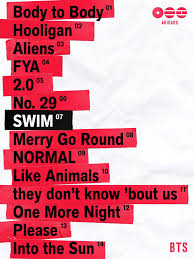
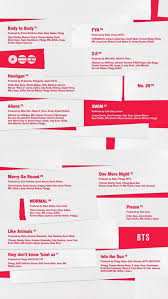
A track-list was soon released giving us a glimpse of what may be to come. With titles such as Hooligan, Alien, Body to Body, Like Animals and One More Night, it was not clear what direction these songs would lead us. I will say a few of us looked at these titles and side eyed them, thinking they are about to really show us a grown side of themselves. Which is to be expected of young men in their early 30’s, with the youngest being 28. It also listed contributing producers on each track, and every single one had at least one or more members created as a songwriter or/and composer, with RM on 13 out of 14 tracks. We would later learn track 6, No.29, is a recording of the Divine Bell of King Seongdeok which is referred to as South Korea’s national treasure No.29.
Finally, March 20th arrived and at midnight we have the led single Swim and music video, which we hope is the 1st of many music videos. And, well, surprise, surprise, it’s an all English language song, with not one Korean lyric. However, this time around, RM and long time BigHit Music songwriter and producer Pdogg are credited as lyricist. For some this was a complete shock, but there were still 13 additional titles to explore. Soon after the song and MV release I went to sleep and would explore the album in depth the next day. I awoke seven hours latter to a barrage of X (formally Twitter), FB and IG post of both positive and negative comments about Arirang. The running theme among the negative comments were “ this is not their style”, “this is not what I expected”, “why are the songs mostly in English; I thought they were going back to their Korean roots.”
Here is my rant; I was pissed by some of these comments. Now, I can understand, as a long time fan, having certain expectations of what to expect. However, they LITERALLY told us to expect a more mature sound, and that they were exploring new genres, techniques and sounds, while moving in the direction of discovering themselves. It is not BTS’s fault that you put expectations on what was to be released. The comments that started off with “I didn’t have any expectations for the album, but I thought with the album titled, Arirang, they wouldn’t have as many english songs and have songs with more traditional Korean themes and sounds.” These people made an assumption based on the title that BTS would create something more literal in meaning, literally putting an expectation on what they would create. Instead of having a completely open mind to the possibility of anything, you are now upset or disappointed by BTS not meeting your preconceived biased expectations.
In my opinion, the English language songs they composed and produced were them taking back ownership of their creativity and representation. The prior English songs were created for them, not with them. The lyrics were not in their voice or necessarily topics they wanted to sing about. The type of pop they had released prior to Dynamite was something they had yet to explore, but it was met with great success. Yet, for newer fans this was now the expectation of their sound. So to me, this new album was them saying hey, we’re not opposed to English language songs, but this is what we want to talk about and this is the sound we want to put out. This is a declaration of controlled collaboration. Working with other western lyricist and composers to create what they would have be a representation and the legacy of their work. And to be completely honest, although I was happy BTS was finally being recognized the by Recording Academy and had an opportunity to win a Grammy, I hated the idea that they could win for a song like Dynamite and Butter. Because, in my opinion, neither of these songs represented them as a group, their prior discography or capabilities as songwriters and music composers.
Also, this idea of telling these Korean born and raised creatives that the use of Arirang was culture baiting is insane to me. Whether you are Korean born and raised in the country, ethically Korean born and/or raised in another country or if you have extensively studied Korean culture and history, none of us are in a position to challenge how they creativity represent a significant part of their culture.
Writer Jiye Kim crafted an op-ed article for the publication Teen Vogue, “Who Decides if BTS’s Album ‘Arirang’ is ‘Korean Enough’.” In the article she explores her own relationship with Korean culture and identity. She explored the ideal of Korean-ness as it pertains to BTS and Arirang. While reading the article, this stood out:
“Yes, they’re Korean, which is why they perform the likes of “IDOL,” “Ddaeng,” and their newest addition, “Body to Body,” with its overt Korean traditional themes. But a Korean artist does not have to be limited to using their country’s traditional instruments and speaking in their own language to be a Korean artist, just as much as I do not have to eat certain foods and wear certain clothes on a certain day of the year to be Korean.”
Jiye continues to point out the Korean references through the groups 14 tracks with the mention of independence movement leader Kim Gu in the track ‘Aliens’, the updated version of a 1988 song Hand in Hand which was the theme song for the 1988 Suummer Olympics in Body to Body, signifying the breaking down of walls between people. Again an English track infused with not only the Korean language but with the chorus of Arirang as the tracks bridge. She goes on to list other connections between the various tracks, including her own thoughts on how BTS could have infused their own spin on Arirang or incorporating more Korean-ness into their album. However, overall, she ends her op-ed by noting; “…Arirang is BTS’s album, not BTS featuring the disparate thoughts of every listener.”
I truly believe an ardent fan, or ARMY, would recognize the return to their hip/hop roots, because I think, either some forgot or may not know the early days of Bangtan Sonyeondan; a hip/hop centric group infused with pop. They ultimately, became a pop group infused with hip/hop. I think this album crafts a fusion of both, returning or staying true to their hip/hop roots with tracks 1 through 5, exploring various sub-genres such as Classic Rap, Trap, Chopped and Screwed and Jersey. Then they give us a reprieve, a sonic cleanse with No.29, getting ready for the continuation of their chosen work. Then we slid into what most are familiar with from them, amazing vocals, layer over pop/R&B tracks, sprinkled with a little electronic and techno.
Lastly, the part of the negative discourse was the opinion that there was little messaging to the songs. BTS as always been known to incorporate thought provoking songs and lyrics in a lot of their releases since the beginning of their career. Often some of these songs were thought to be what contributed to their slow rise to fame as many of their songs talked about the struggles of youth (No More Dreams), challenged Korea’s patriarchal system (Bapsae), and feelings of grief and lose (Spring Day). I was so taken aback, because the whole time, I’m thinking to myself; are you all listening to the same album I am? Are you not picking up what they are putting down on these tracks? Although done in metaphors, many of the songs don’t even require translation into English to hear, see, and read some of the themes they are expressing that seem clearly personal.
Songs like ‘Normal’ with opening lyrics: “Fantasy and fame, yeah, the things we choose Show me hate, show me love, make me bulletproof, Yeah, we call this shit normal..” Throughout the song lyrics point to the discussion of what they have gone though to the point, that for them, negative or postive it is just a normal part of their reality as Korean idols and global pop stars. Then there is the predominately Korean lyric Aliens with lyrics that allud to their experience in the west or with Western media and their treatment as foreigners. With translated lyrics courtesy of fellow ARMY @STUDIO_0613 on X, they say “..Watch us learn, yeah we aliens, If you wanna hit my house, take off your shoes (alluding to the Asian cultural tradition of taking off your shoes when entering the home, typically not practiced in western society, a sign of respect), yeah we aliens. How are you so shameless, mind your manners we aliens, from the East to the sun risin’. Aliens, aliens.”
The term “aliens” has been used to refer to foreigners visiting or those who migrated to the United States from a foreign country. The word derives from the Latin alienus, meaning “belonging to another” or “foreign” and as per the US Immigration and Nationality Act (INA), an alien is defined as “any person not a citizen or national of the United States.” However, the term has been used as and taken on a negative meaning for foreigners in the United States. It is often used to project a lack of belonging , of otherness, of not being like others apart of your chosen community.
As BTS started gaining popularity, Western global media outlets clambered for interviews with the pop group. Too often showing a lack of research on the group or Korean culture. Unfortunately, this has been a bit of the norm even in 2026, as other K-Pop groups reach global popularity, you still have outlets in awe of the English langauge skills of some members clearly unaware that said member was born and raised in a English speaking country. To this day I still recall the years of interviewers bringing up how RM “learned” English by watching the television series’Friends” because of his great English communication skills. In actuality, like many learning a new language, he used immersion through media to help hone his skills while studying at a hagwon (afterschool private learning). If learning a new language was as easy as just watching hours of a television series, millions of us Korean drama lovers would be hella fluent in Korean.
Okay, rant over, I got it all out of my system. Listen, I am not a 100 percent fan of Arirang. Most songs I loved immediately, others for me were growers not showers and it took a few listens for me to tap in. I would saw I 80 percent love, 20 percent like the album. But, I would never say I dislike or even hate what BTS has worked so hard on, especially after watching them discuss the process on their Weverse livestream as the album dropped or their interview with Zane Lowe from Apple Music. Plus, I am sure we will learn more as to the process and the story behind the songs and album when their documentary with Netflix premieres.
As Jiye, from Teen Vogue, so eloquently said this is not about the album we wanted, it is about the album BTS wanted to make. Lyrics by them, composition by them, hoping that ARMY would be along for the ride as they rediscover who they are not only as musicians, but as Koreans in a world where they are still fighting to be acknowledged just like their peers (Grammy’s), stay connected to their roots as Koreans, and what all that means to them as men and artist still trying to find themselves.
Until Next Time…….
Please take a look at The Industry, I Guess Podcast with music journalist Brooke Morrison and Tetris Kelly to see their take on the new album and controversy.
 The Melanin Ajumma